Welcome to the Ganesh Sivaraman Lab!
Our research group is based at the Department of Materials Design & Innovation, University at Buffalo. Our group develops GPU-accelerated machine learning methodologies for atomistic simulations of materials and molecules. We leverage some of the nation’s most powerful open-science high-performance computing resources including the U.S. Department of Energy’s Exascale systems, New York State’s Empire AI infrastructure, and UB’s Center for Computational Research to address grand challenges in computational materials design, experimental characterization, and personalized medicine.
Our research is organized into three key thrust areas:
Thrust 1: Machine-Learned Interatomic Potentials (MLIPs) with Long-Range Physics
Machine-learned interatomic potentials (MLIPs) have revolutionised molecular simulations by achieving near–quantum-mechanical accuracy at a fraction of the cost. Our group develops automated active-learning algorithms for MLIP training and explores novel strategies to incorporate long-range physics into these models. We are also pioneering life-long-learning frameworks that enable models to efficiently retain and reuse knowledge across diverse materials systems.
Thrust 2: AI-Guided Discovery of Safe, High Performant Monomers for Biomedical Applications
Building upon our methodological advances in MLIPs, we are collaborating with UB’s School of Dental Medicine to design safer, high-performance monomer resins. Current bisphenol A–based (Bis-GMA) materials pose health risks and exhibit long-term mechanical degradation. Through an AI-guided, computational-experimental co-design pipeline, we aim to discover safer, high performance monomer with superior mechanical and biocompatible properties.
Thrust 3: MLIP-Driven Characterization of Real-World Experiments
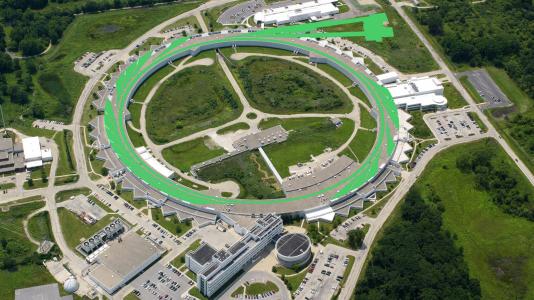
In collaboration with scientists at the Advanced Photon Source (Argonne National Laboratory), we apply our MLIP methodologies to interpret and accelerate experimental materials characterization, bridging the gap between computational prediction and experimental observation.
We also maintain an active portfolio of open-source software for active learning for MLIP, life long learning for large language models, molecular machine learning and machine learning of long range interactions. Explore our software contributions on the Software page.
Interested in joining our team? Please visit the Join Us page for details.